Until recently, aura farming meant doing something with so much confidence that it looked completely effortless—like scoring a goal and celebrating with a... let’s call it distinctive pose, sinking a no-look basket, or showing up an hour late to meet your friends with a smile and the composure of someone who thinks everyone else simply arrived too early.
Now, the concept has moved from social media to the streets with aura battles. Two people face off by recreating viral poses and gestures while the crowd decides who has more charisma. They might perform some of the same moves, but who does them—and how—makes all the difference. That’s the battle.
Something similar happens with social media trends. As soon as one starts taking off, branded versions pop up everywhere within hours. The audio is the same and so is the format, so the question becomes who can make it their own and cleverly add something that wasn’t already in the template. Only a few brands manage to make us remember who posted it, not just the trend itself. Plenty of brands take part. Far fewer gain any aura from it.

The trend is ready-made. The wit is up to you.
A trend offers something very tempting: an idea with attention already built in. People recognize the format and quickly understand where the content is going. Part of the work seems to be done for you. Cool, right?
There is a catch, though. When several companies use the same structure, comparisons are inevitable. It becomes immediately obvious who has found their own take and who has simply changed two words to squeeze the product in wherever it would fit.
POV videos are a pretty good example. They started out by showing a scene from the perspective of the person experiencing it, then ended up appearing at the beginning of almost every imaginable video. Eventually, “POV” stopped adding any real perspective or context. It was still there because it was part of the moment—like that coworker who is still copied on an email thread, even though nobody knows why.
Trends put brand identity to the test. If the audio, structure, and much of the joke are already provided, the only thing that can make one version different is the perspective of the brand posting it. That is when you find out how much brand identity exists behind the content, beyond the logo on the screen.
Aura isn’t built in an afternoon
Some brands can join a conversation without making anyone wonder, “What are they doing here?” They have spent so long building a recognizable world of their own that, when the right trend comes along, it feels as though it was made for them.
In 2024, someone posted a photo of a particularly shaped tomato, and another user commented that it was “very Loewe,” even if they couldn’t explain exactly why. The comment reached Jonathan Anderson, the fashion house’s creative director at the time, and a few days later, that tomato had become a handbag.
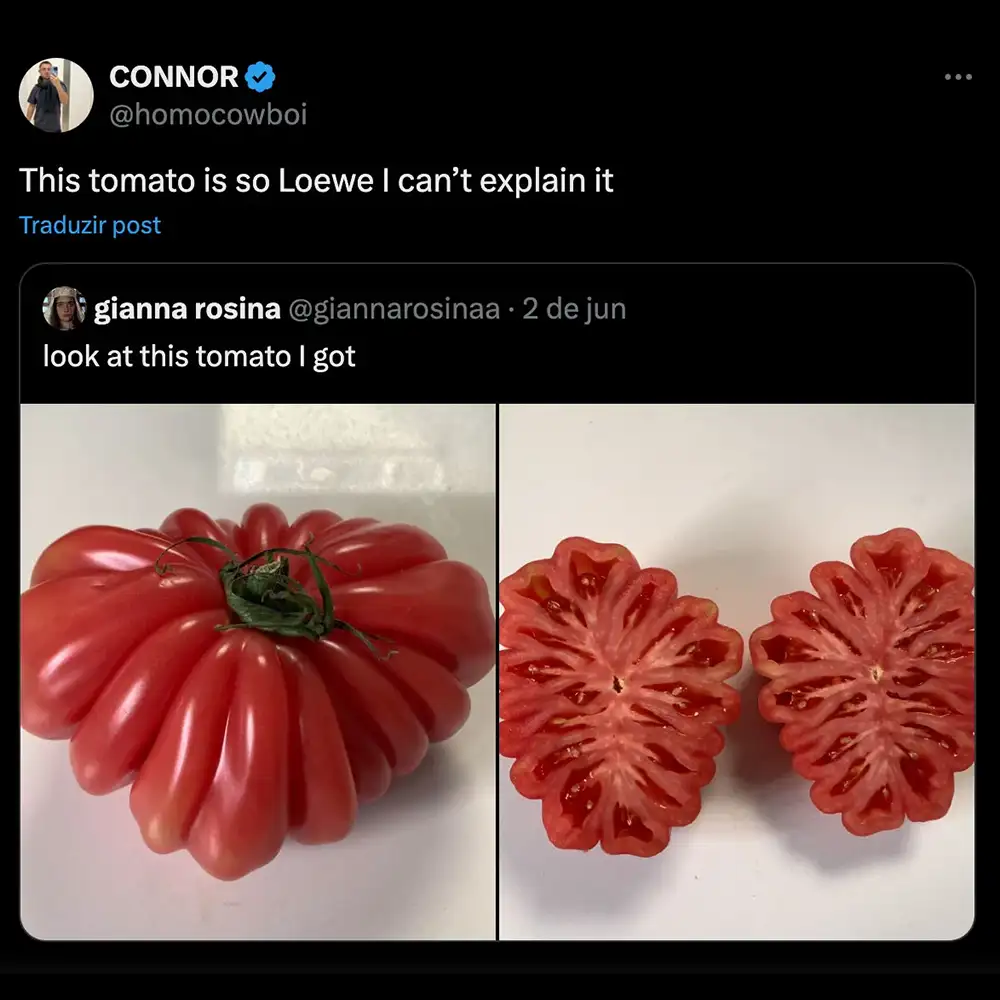
What made it work was that people had seen Loewe in the tomato before Loewe had done anything. The brand had spent years experimenting with shapes and giving craftsmanship a fresher edge, creating an association strong enough for people to recognize the brand even outside its products. The handbag took advantage of the viral moment, yes, but the aura was already there.
This also explains why copying another company’s reaction rarely works that well. We see the outcome, but not everything that allowed the brand to get there. You can’t add all that groundwork at the last minute alongside the latest trending audio.
A trend can give a brand visibility. What it is unlikely to do is give it a personality it didn’t have before someone hit “post.”
Gen Z doesn’t have a magical detector
People often say that Gen Z can instantly tell when a brand is trying to be something it isn’t. It sounds almost like a superpower, but the explanation is less mysterious: they know the codes because they live with them.
Anyone who has seen hundreds of versions of a trend knows when it started getting old. They can also tell whether an expression has been used naturally or dropped into the copy after someone looked up what it meant. And this isn’t purely about age. A forty-year-old who knows the language may understand it better than a twenty-two-year-old who barely engages with it.
That’s why dropping in a current buzzword or filming a “more casual” video isn’t enough to connect with a younger audience. Push it too far and you get the dreaded try-hard effect, where the effort to appear natural attracts more attention than the idea itself.
Brands that understand these codes know when to join in and when to sit one out. Keeping up helps, but having good judgment earns you far more aura points.
The battle doesn’t end when you hit “post”
Once the trend has passed and the algorithm has moved on to something else, it’s time to see what actually happened. You don’t need to prepare a massive report. Four fairly unforgiving questions will do:
Can you recognize the brand if you cover the logo?
If you still know who is behind it, the brand has successfully made the format its own. If any company could have posted it, nearly all the credit belonged to the template.
Is there still an idea once you remove the viral gesture?
If the content still makes sense, there may be something worth developing further. If all the humor disappears, you had simply rented it for a few hours.
What happened after the views?
Profile visits and brand searches can help you understand whether the attention went any further. Comments matter too—particularly whether people remember who posted it or simply repeat the joke.
What is worth keeping?
Maybe you discovered that the team is good on camera or that a particular way of explaining the product connects better with your audience. That can keep working without bringing back the same viral audio.
Aura battles end when the crowd decides who did it best. With brands, the outcome takes a little longer to reveal itself. Some will rack up huge numbers of views for a day. Others, if they’re luckier, will ensure that the next time they appear in a trend, people won’t need to check the account name to recognize them.
And we’re sorry to break it to you, but aura doesn’t come included with the trend. You have to bring your own.



" height="36px" id="sDOSBTXTI" transform="translate(0.456 0)" width="35.99998900000001px"/></svg>)
" height="36px" id="y7VtU_Phg" transform="translate(0 0)" width="35.999955858999996px"/></svg>)