Think. Create. Change.
Industrial Brand
Strategy in 2026
Industrial Brand
Strategy in 2026
Why brand already drives decisions in complex B2B processes
Why brand already drives decisions in complex B2B processes
For years, competing in industrial B2B markets meant having the best product, the best engineering, or the most competitive price. Today, that is no longer enough.
Between 2021 and 2025, industrial buying environments have changed in a structural way. Buying committees are larger. Technical differences between suppliers are shrinking. Risk levels are higher. Decision cycles are longer and more complex.
In this context, brand is no longer a layer of communication. It is a decision system that directly influences how suppliers are evaluated, compared, trusted, and ultimately selected.
This white paper explains why brand has become a decisive factor for industrial companies in 2026 and how it impacts risk perception, purchasing confidence, and long-term growth.
Download the white paper
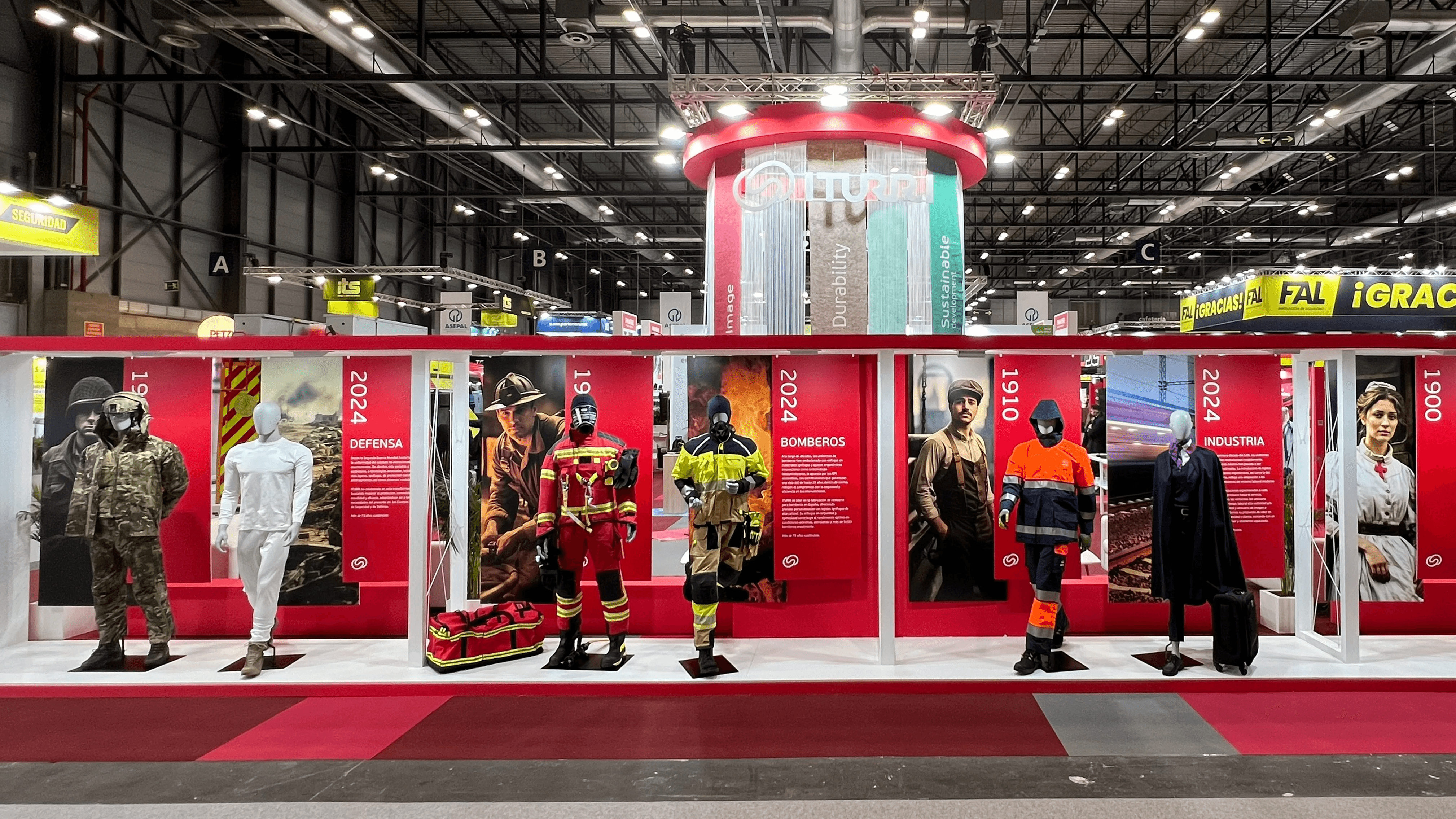
Iturri
Your safety, matters.
See project
Iturri
Your safety, matters.
See project
Iturri
Your safety, matters.
See project
How decisions are made in industrial B2B today
Industrial B2B decisions are longer, more distributed, and more exposed to risk.
Most of the evaluation happens before speaking with suppliers.
Decisions involve multiple stakeholders with different priorities.
Internal validation carries more weight than short-term benefits.
Technical proposals are increasingly similar across competitors.
As a result, decisions no longer depend only on what a company offers, but on how it is perceived before any interaction. Brand becomes a first point of reference long before commercial conversations begin.
Strategic clarity
Clear positioning and narrative that allow buyers to quickly understand, compare, and align internally.
Purpose-driven execution
Consistent, professional execution of identity, systems, and experiences that reinforce credibility and trust.
Operational consistency
Consistent alignment between sales discourse, technical documentation, digital presence, and commercial materials.
The three factors that influence industrial decision-making
Recent research and market experience consistently point to three interdependent factors that shape B2B decisions in complex industrial environments:
When one of these elements fails, the effectiveness of the others is compromised.
When brand stops driving growth
In many industrial companies, brand does not actively harm performance. But it can quietly limit it.
Some common signals:
Each department describes the company in a different way.
Sales closure relies too heavily on personal relationships.
Technical discourse overshadows the value proposition.
The company operates well, but is not perceived as a leader.
Competition happens on price despite having a superior offering.
When several of these signals accumulate, brand stops being an asset and becomes a constraint.
What you’ll find in the full white paper
The full whitepaper expands on these insights with:
International research (McKinsey, Gartner, Forrester, Brand Finance, Edelman)
A detailed analysis of industrial buying behavior in the U.S.
A structured framework to understand brand’s role in decision-making
Practical indicators to assess whether brand is limiting growth
Strategic conclusions for companies competing in complex B2B markets
Why brand reduces risk in complex industrial environments
In industrial contexts, decisions carry operational, financial, and reputational consequences. A wrong choice can lead to production delays, safety risks, cost overruns, or long-term dependency.
Brand plays a critical role in reducing perceived risk through three core functions:
Simplification
Helps buyers quickly understand what a company does and how it delivers value, without having to decode complex technical documentation in the early stages.
Signaling
Acts as a proxy for reliability when the product cannot be fully evaluated upfront.
Simplification
Helps buyers quickly understand what a company does and how it delivers value, without having to decode complex technical documentation in the early stages.
Signaling
Alignment
Acts as a proxy for reliability when the product cannot be fully evaluated upfront.
Ensures consistency between narrative, behavior, and execution across all touchpoints, reducing friction during internal validation.
Alignment
Ensures consistency between narrative, behavior, and execution across all touchpoints, reducing friction during internal validation.
In high-risk decisions, brand helps buyers move forward with confidence.
In high-risk decisions, brand helps buyers move forward with confidence.
In high-risk decisions, brand helps buyers move forward with confidence.

Saxun
Your world, our universe
See project
Saxun
Your world, our universe
See project
Saxun
Your world, our universe
See project
The three factors that influence industrial decision-making
Recent research and market experience consistently point to three interdependent factors that shape B2B decisions in complex industrial environments:
Strategic
clarity
Clear positioning and narrative that allow buyers to quickly understand, compare, and align internally.
Purpose-driven execution
Consistent, professional execution of identity, systems, and experiences that reinforce credibility and trust.
Operational consistency
Consistent alignment between sales discourse, technical documentation, digital presence, and commercial materials.
When one of these elements fails, the effectiveness of the others is compromised
When one of these elements fails, the effectiveness of the others is compromised
In high-risk decisions, brand helps buyers move forward with confidence.
When brand stops driving growth
In many industrial companies, brand does not actively harm performance. But it can quietly limit it.
Some common signals:
Each department describes the company in a different way.
Sales closure relies too heavily on personal relationships.
Technical discourse overshadows the value proposition.
The company operates well, but is not perceived as a leader.
Competition happens on price despite having a superior offering.
When several of these signals accumulate, brand stops being an asset and becomes a constraint.
What you’ll find in the full white paper
The full whitepaper expands on these insights with:
International research (McKinsey, Gartner, Forrester, Brand Finance, Edelman)
A detailed analysis of industrial buying behavior in the U.S.
A structured framework to understand brand’s role in decision-making
Practical indicators to assess whether brand is limiting growth
Strategic conclusions for companies competing in complex B2B markets
Get the full white paper
Get the full white paper
Gain a clear, research-backed perspective on how brand influences industrial B2B decision-making in 2026 — and what that means for your company’s growth.
We’ve done it before




Small Insights*
Explore the latest ideas shaping the future of brands

Brand Experience
The battle for brand aura
Brand Experience
The battle for brand aura

Brand experience
Brands through a tourist’s eyes
Brand experience
Brands through a tourist’s eyes

Branding
Brand Evolution
The B2B dictionary is outdated
Branding
Brand Evolution
The B2B dictionary is outdated

Brand Experience
Branding
Purpose
The invisible cost of not having a coherent brand
Brand Experience
Branding
Purpose
The invisible cost of not having a coherent brand
Small Insights*
Explore the latest ideas shaping the future of brands
We’ve done it before

" height="36px" id="sDOSBTXTI" transform="translate(0.456 0)" width="35.99998900000001px"/></svg>)
" height="36px" id="y7VtU_Phg" transform="translate(0 0)" width="35.999955858999996px"/></svg>)
Helping brands
define their future, and that of the world around them.
New business
hello@wearesmall.es
Join the team
hello@wearesmall.es
Alicante
Pl. del Alcalde Agatángelo Soler, 5, Office 3-5, 03015
T. +34 965 061 098
Vitoria-Gasteiz
Herminio Madinabeitia, 16-18
Pavilion 7
New York
80 Broad St, New York,
NY 10004, EE. UU

SmallCreative Band, S.L. © 2025
Helping brands
define their future, and that of the world around them.
New business
hello@wearesmall.es
Join the team
hello@wearesmall.es
Alicante
Pl. del Alcalde Agatángelo Soler, 5, Office 3-5, 03015
T. +34 965 061 098
Vitoria-Gasteiz
Herminio Madinabeitia, 16-18
Pavilion 7
New York
80 Broad St, New York,
NY 10004, EE. UU
Helping brands
define their future, and that of the world around them.
New business
hello@wearesmall.es
Join the team
hello@wearesmall.es
Alicante
Pl. del Alcalde Agatángelo Soler, 5, Office 3-5, 03015
T. +34 965 061 098
Vitoria-Gasteiz
Herminio Madinabeitia, 16-18
Pavilion 7
New York
80 Broad St, New York,
NY 10004, EE. UU